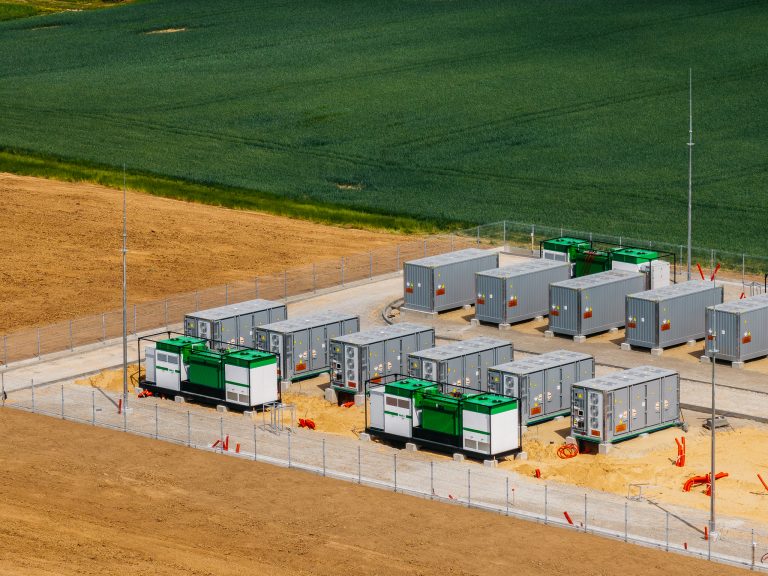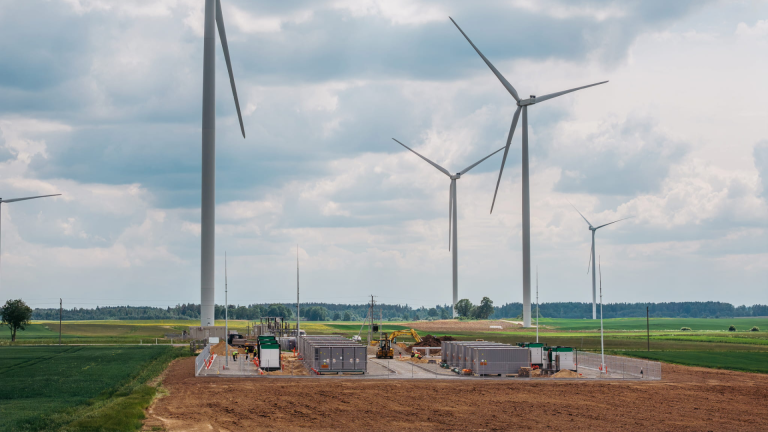
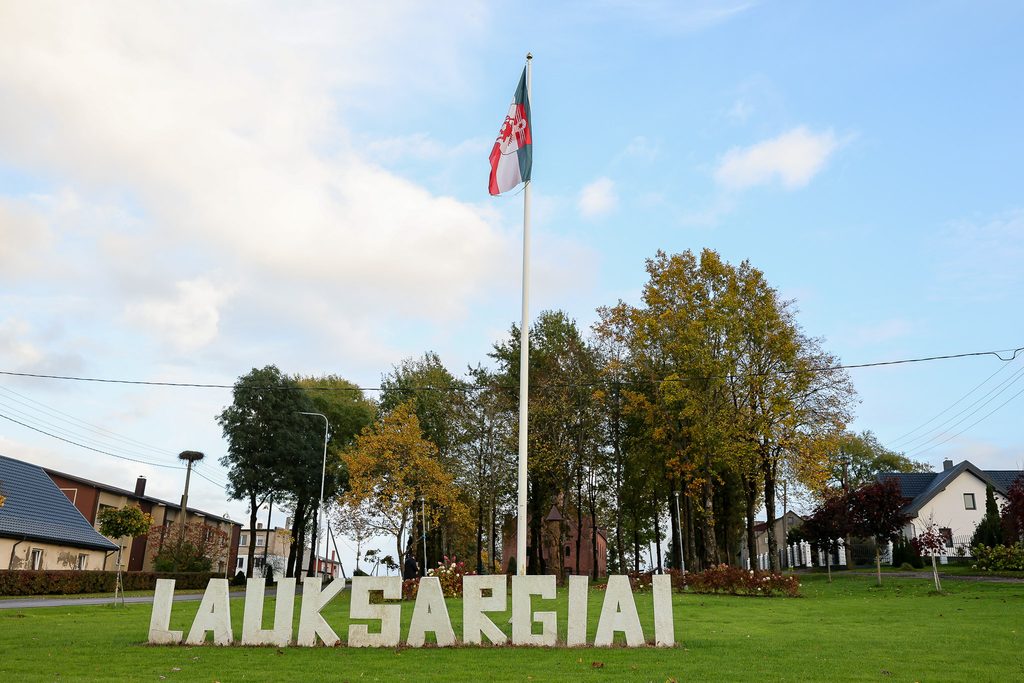
In Lauksargiai, a small town in the Tauragė district, the traditions of Lithuania Minor are alive not only in historical tales. Here, acorn coffee is still brewed, crispy waffles are baked, local songs are sung, and the locals dress in traditional costumes. Neringa Matevičienė, Community Chair, explains that the desire to preserve the region’s unique character encourages them to undertake ever-new initiatives. These are made possible in part by the Tauragė wind farm, which operates nearby, and the financial support provided by its operator, Ignitis Renewables.
The traditions of Lithuania Minor – more than just memories
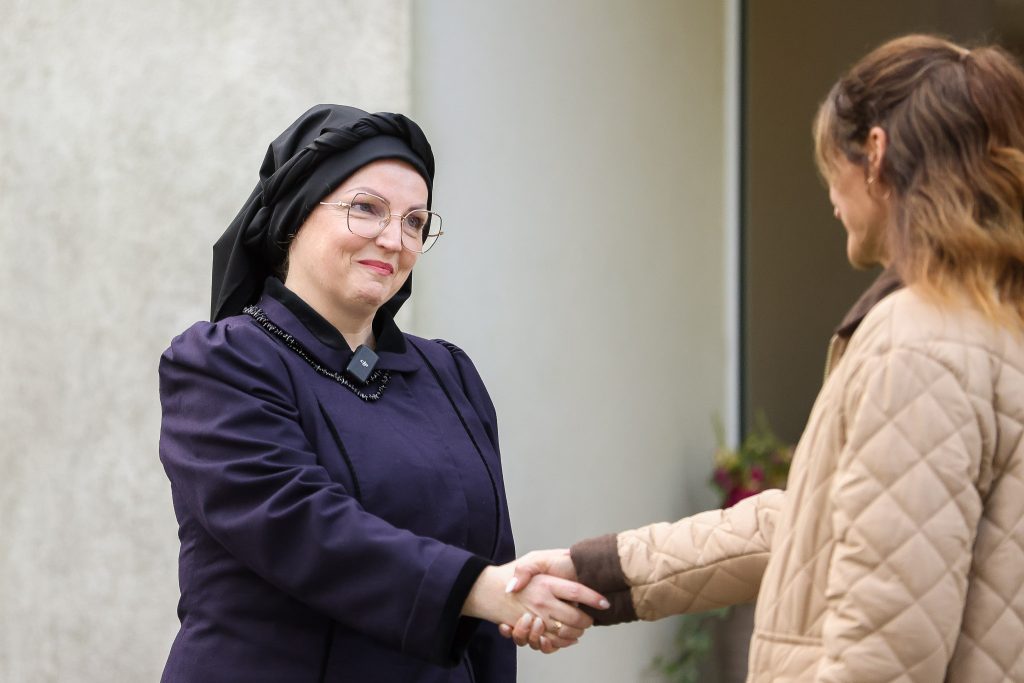
Upon arriving in Lauksargiai, the Community Chair first suggests learning about the local history. Here, it is worth visiting the former border post, the railway station and Lauksargiai Church. However, to get to know this region better, historical buildings alone are not enough – you also need to meet the people who still cherish the traditions of Lithuania Minor to this day.
“Then we’d invite you to the cultural centre, show you our traditional costumes, songs and dances, and perhaps you’d like to try some coffee and waffles,” says the chair of the community.
It is at the cultural centre that much of the Lauksargiai community’s life centres today. Events and educational activities are organised here, the folk group holds its rehearsals, and residents gather not only on festive occasions.
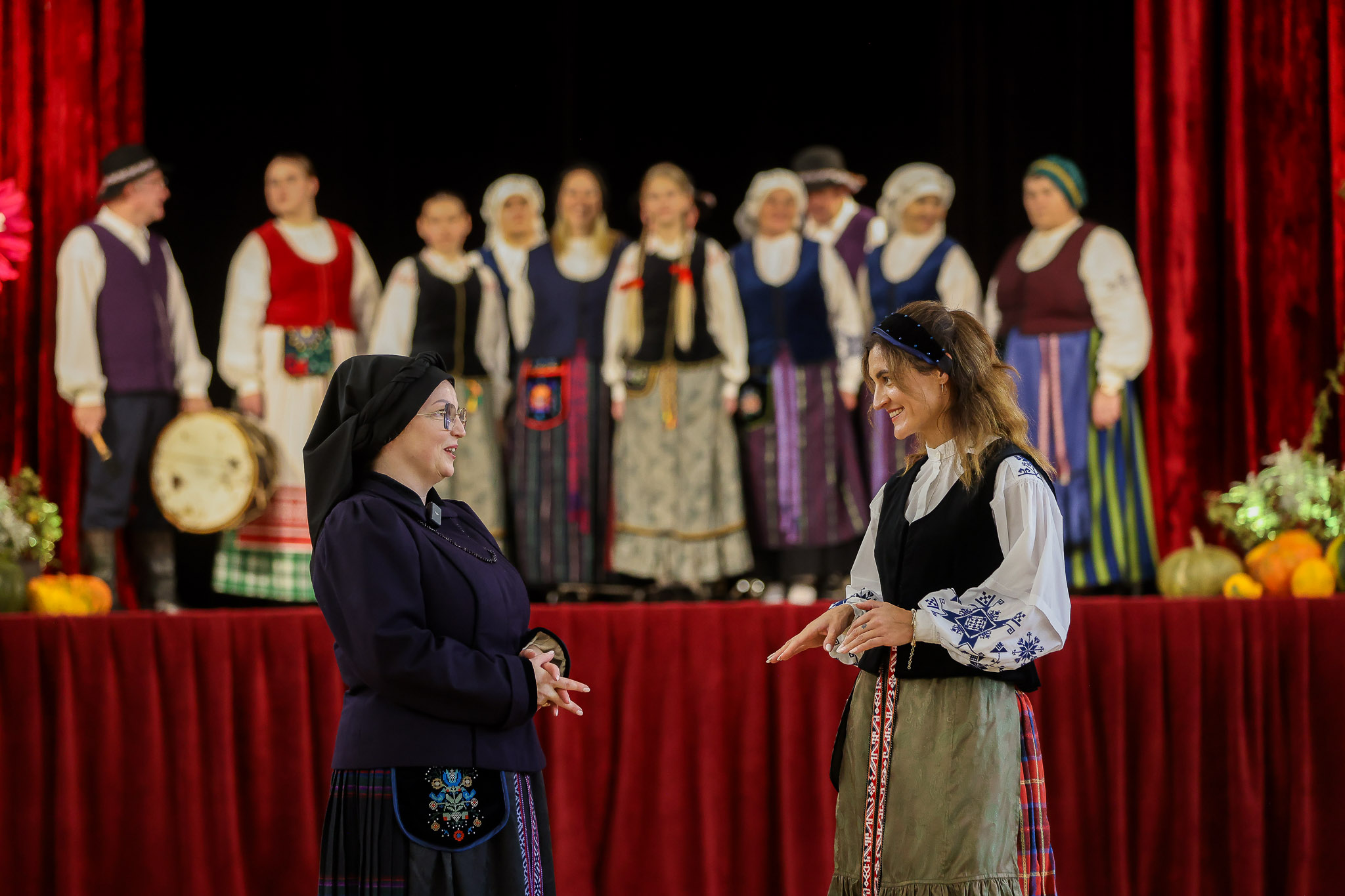
N. Matevičienė says that it is particularly important to her to showcase the traditions of Lithuania Minor, which is why she wears the traditional costume of Lithuania Minor with pride.
“I really enjoy wearing it and showcasing the traditions of Lithuania Minor through the costume. It’s an honour,” she says.
Acorn coffee and waffles – a flavour worth preserving
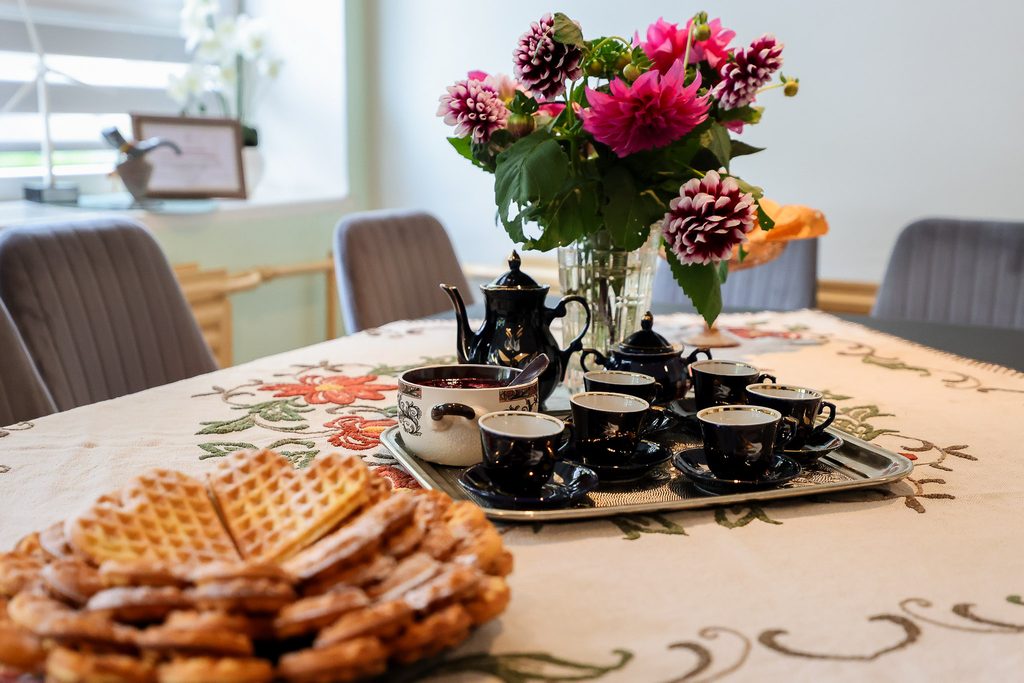
One of the traditions cherished by the Lauksargiai community is the culinary heritage of Lithuania Minor. Acorn coffee and waffles – traditional waffles whose baking has its own secrets – hold a special place here.
According to N. Matevičienė, the most important thing is that the waffles are crispy. As for the taste of the coffee, that depends on the hostess: some brew it stronger, others dilute it with milk or sweeten it with honey.
“We learn from our elders and pass on this knowledge to the younger generation, so that they, in turn, may carry on our traditions and culinary heritage after us,” explains the community chairwoman.
The residents of Lauksargiai also treat others to their local specialities. When taking part in local festivals, they set up dedicated community spaces where they present the culinary heritage of Lithuania Minor. The aim is not only to treat visitors but also to introduce them to the unique character of this region.
However, enthusiasm alone is not enough when it comes to catering for larger groups of people. Previously, the women of the community used to bake waffles at home, using their own equipment. This led to the idea of seeking funding that would enable them to expand this activity.
With financial support from ‘Ignitis renewables’, the community purchased professional waffle-making equipment and equipment for drying acorns.
“We are very grateful because we have acquired an industrial waffle-making machine. We have also purchased equipment for drying acorns. We will try drying the acorns ourselves and making acorn coffee, rather than just buying it,” explains N. Matevičienė.
According to her, the ability to make acorn coffee themselves is also important for practical reasons. A considerable amount is used when serving visitors at events, so constantly buying coffee is costly for the community.
From stage lighting to traditional costumes
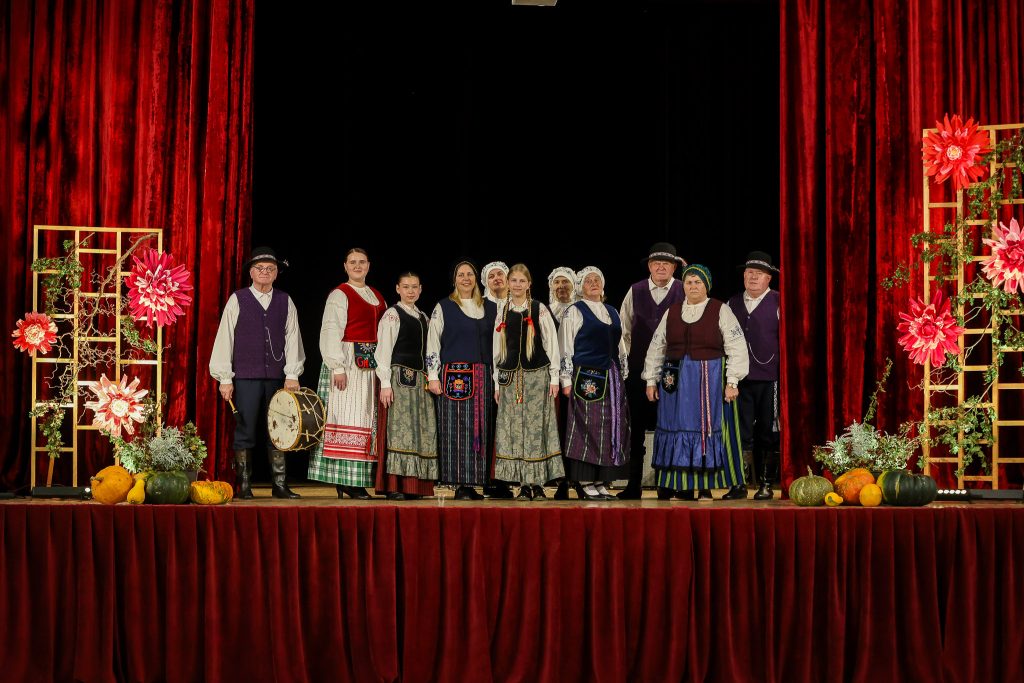
Preserving culinary heritage is just one of the Lauksargiai community’s initiatives. In recent years, considerable attention has also been paid to the cultural centre, which hosts events and performances by local groups.
N. Matevičienė recalls that the building’s electrical wiring used to be outdated, and the options for stage lighting were limited. Once the electrical infrastructure had been upgraded and more modern lighting installed, more opportunities opened up for organising events.
“Once the electrical wiring and stage lighting had been upgraded, we were able to organise more events and invite more professional performers,” she explains.
These changes were made possible thanks to financial support from ‘Ignitis renewables’. The upgraded lighting allows the hall to be adapted for different events, and performers on stage are now more clearly visible to the audience.
Another investment important to the community is the traditional costumes of Lithuania Minor.
N. Matevičienė explains that the idea of bringing the group together and dressing them in traditional costumes gained momentum following an invitation to the Seimas, where the centenary of the Klaipėda region’s annexation to Lithuania was commemorated.
At that point, the community began to consider how they could showcase their region. The first costumes were purchased using project funding from the municipality, but later the desire arose to outfit the entire troupe.
“When the opportunity arose to submit an application to the company ‘Ignitis’, we realised that we needed to outfit the entire troupe. It really is a considerable sum,” recalls N. Matevičienė.
A single authentic traditional costume of Lithuania Minor costs around 1,000 EUR, sometimes even more. And they needed to outfit 12 people – dancers, band musicians and members of the folk group.
Today, the community is delighted to have costumes that not only allow them to look their best at events, but also to showcase the clothing traditions of Lithuania Minor.
Every detail of the costume tells a story
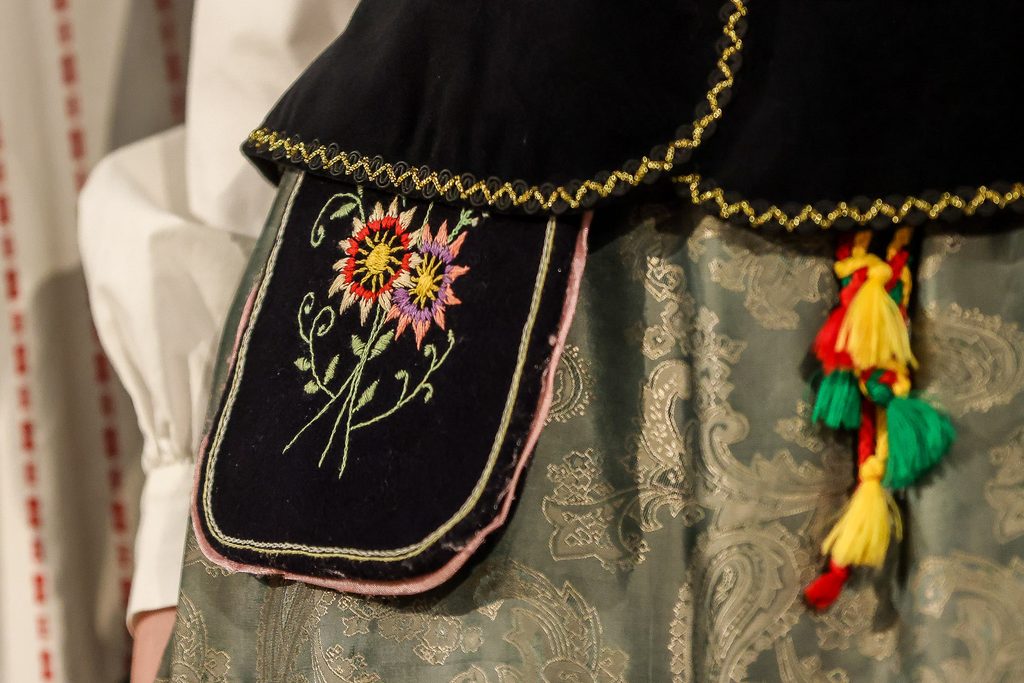
The traditional costumes of Lithuania Minor stand out not only for their colours or fabric patterns, but also for their distinctive details. One of these is the ‘delmonas’, a traditional pocket fastened at the waist, which was worn by the women of this region.
“The delmonas is a detail of the traditional costume of Lithuania Minor that other regions may not have. The letters of one’s name are embroidered onto it to make it personal,” explains N. Matevičienė.
Different colours are matched with each costume, and the details of the outfit can also reveal a woman’s marital status. For example, married women traditionally wore head coverings – bonnets or scarves – whilst unmarried girls could go out with their hair uncovered or wear it in plaits.
The costumes of the members of a folklore group vary, whilst the dance troupe’s outfits are uniform. This preserves the authenticity of the traditions whilst creating a cohesive image for the group.
However, the most important thing is that the costumes do not remain hanging in wardrobes. In Lauksargiai, they are used constantly – community members learn the songs and dances of Lithuania Minor, rehearse and take part in events.
N. Matevičienė acknowledges that for many, this was a new experience. Previously, such activities did not take place within the community, but today rehearsals have become an important part of cultural life.
A small museum – preserving the region’s history
The Lauksargiai Cultural Centre also houses another special space – a small museum where antique items collected by local residents are kept.
Its history dates back to when the local school was still in operation. Pupils, with the help of their history teacher, collected various household items, crockery, agricultural tools and other objects that bear witness to the lives of previous generations.
However, when the school closed, the matter arose as to where to store all of this.
“When the school closed, it was a real shame. The teacher herself had suggested: perhaps we could find a corner somewhere to keep them,” recalls N. Matevičienė.
The exhibits collected in this way were moved to the community centre. Today, you can see antique tools, crockery sets and coffee cups here – everything that the people of the Lauksargiai region once used.
The Community Chair says that the most important thing is to preserve these items for future generations, to show children how their grandparents and great-grandparents lived.
The museum is small for now, but there is no shortage of plans. In the future, they would like to add new exhibits, make it more welcoming and adapt it for visitors.
The biggest dream is to restore the historic railway station
Although the Lauksargiai community has already carried out a number of initiatives, the list of future plans shows no sign of getting any shorter. One of the needs is a basketball court for young people, but at the moment most attention is focused on another dream – the historic Lauksargiai railway station.
The red-brick building holds special significance for community members. It serves as a reminder of the region’s history and, in N. Matevičienė’s view, could become a new attraction.
“There’s something about those red bricks that makes you want to come back again and again. Even in its current, untidy state, you just want to spend time there,” she explains.
The community is already helping to tidy up the area around the station and hopes to establish a new space here for its activities in the future.
N. Matevičienė envisages that, once restored, the station could become a place where visitors could learn about the history of Lithuania Minor, take part in educational activities, and enjoy a cup of coffee and traditional waffles.
“If it can be brought to life in some way and people can enjoy a coffee or some waffles in that setting, then I think people will definitely come and take an interest in our region,” muses the community chairwoman.
Whilst this dream is still on the path to realisation, the residents of Lauksargiai continue to invite people to discover their region through its traditions.
One such opportunity is 26 June. On this day every year, the community treats passers-by to coffee and waffles.
And what best reveals the people of Lauksargiai’s attitude towards their local heritage is the fact that traditions here are not merely a memory of the past. They are alive and well every day – in community meetings, songs, dances and joint projects.
Between 2022 and 2025, Ignitis Renewables allocated 172 513 EUR in financial support to the Tauragė district, of which 45 464 EUR went to the Lauksargiai community. These funds were used to upgrade the electrical wiring and lighting in the cultural centre’s hall, purchase traditional costumes, chairs and an outdoor marquee for events, as well as equipment for drying acorns and baking waffles, and a robot to facilitate the cleaning of the hall. Financial support was also allocated to ‘Žaliasis regionas’ initiative Wind is Coloured Green and for an outdoor arbour and furniture for the Lauksargiai care home.